Transportation EDI: Optimizing Freight Management
 Cogential IT Editorial Team
In the fast-paced world of global commerce, efficient freight management isn't just an advantage—it's a necessity. Businesses are constantly seeking ways to streamline operations, reduce costs, and accelerate delivery times. This is where Transportation EDI (Electronic Data Interchange) emerges as a cornerstone technology, transforming how goods move from origin to destination. As a Principal Solutions Architect at Cogential IT, I've seen firsthand how robust EDI integration can be the differentiating factor for enterprises navigating complex supply chains.
Transportation EDI isn't merely about exchanging documents; it's about creating a seamless digital ecosystem where carriers, shippers, 3PLs, and other logistics partners communicate instantly and accurately. This level of synchronization is critical for optimizing freight management, ensuring that every shipment is handled with precision and every stakeholder has real-time visibility.
Key Takeaway:
Transportation EDI automates critical communication, minimizes errors, accelerates processes, and provides unparalleled visibility across the entire freight lifecycle, fundamentally driving operational efficiency.
Understanding Transportation EDI: The Digital Backbone of Logistics
At its core, Transportation EDI is the standardized electronic exchange of business documents between computer systems. Instead of manual data entry, faxes, or emails, EDI automates the flow of information, reducing human error and processing delays. For the logistics and transportation sector, this means a significant leap towards operational excellence.
What Documents Does Transportation EDI Handle?
The range of documents exchanged via EDI in transportation is extensive, covering every stage of a shipment's journey. Some of the most critical include:
- EDI 204 - Motor Carrier Load Tender: A shipper or 3PL uses this to offer a load to a carrier.
- EDI 990 - Response to a Load Tender: The carrier's acceptance or rejection of the tendered load.
- EDI 214 - Transportation Carrier Shipment Status Message: Provides real-time updates on shipment events (e.g., pickup, en route, delivery).
- EDI 210 - Motor Carrier Freight Details and Invoice: The carrier's invoice for services rendered.
- EDI 211 - Bill of Lading: Details the type, quantity, and destination of goods being shipped.
- EDI 212 - Shipping Manifest: A list of shipments on a particular truck or vessel.
- EDI 850 - Purchase Order: While not strictly transportation, it often initiates the freight process.
- EDI 856 - Advance Ship Notice (ASN): Informs the receiver about an incoming shipment, including details about its contents and packaging.
This standardized exchange ensures that all parties speak the same digital language, minimizing misinterpretations and accelerating the entire freight lifecycle.
The Indispensable Role of EDI in Optimizing Freight Management
Optimization in freight management translates to faster delivery, lower costs, and happier customers. Transportation EDI directly contributes to all these goals through several key mechanisms.
Enhanced Efficiency and Automation
Manual processes are inherently slow and prone to errors. With EDI, tasks like load tendering, booking, tracking, and invoicing become automated. This frees up logistics personnel to focus on strategic initiatives rather than administrative burdens.
- Automated Load Tendering: Shippers can send load tenders to multiple carriers simultaneously, receiving rapid responses.
- Streamlined Documentation: Bills of lading, manifests, and customs documents are generated and exchanged electronically, reducing paperwork and delays.
- Faster Invoicing and Payments: EDI 210 automates the invoicing process, leading to quicker reconciliation and reduced payment cycles.
Superior Supply Chain Visibility and Real-time Tracking
One of the most significant benefits of Transportation EDI is the unparalleled visibility it offers. With EDI 214 messages, shippers and 3PLs receive real-time updates on shipment status, from pickup to delivery. This means:
- Proactive Problem Solving: Early detection of delays or issues allows for timely intervention.
- Accurate ETAs: Customers receive precise delivery estimates, improving satisfaction.
- Reduced Expedited Shipping: Better planning through visibility minimizes the need for costly last-minute expedited shipments.
Cost Reduction and Error Minimization
The financial impact of EDI is substantial. By eliminating manual data entry, businesses save on labor costs and drastically reduce errors that lead to chargebacks, penalties, and re-shipments. Automated reconciliation of invoices against purchase orders and shipment details also prevents overpayments and disputes.
Improved Carrier-Shipper Relationships
Seamless communication fosters stronger partnerships. When carriers and shippers can exchange information effortlessly and accurately, trust and reliability grow. This leads to more favorable rates, priority service, and a more resilient supply chain.
Expert Insight:
"The true power of Transportation EDI isn't just in digitizing documents; it's in enabling a predictive and responsive supply chain. Companies that master EDI integration gain a significant competitive edge through agility and cost control." - James Wilson, Principal Solutions Architect.
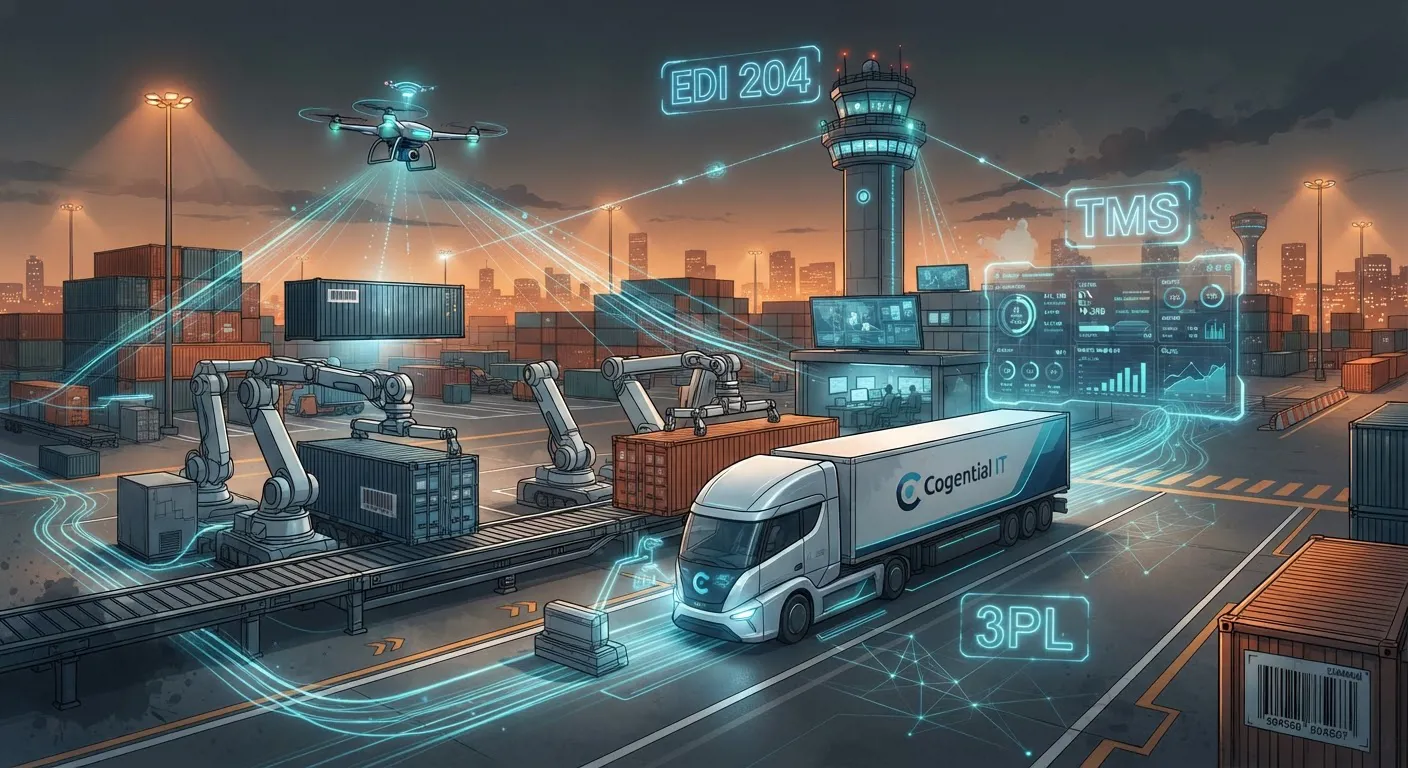
The Workflow of Transportation EDI: A Visual Guide
Let's visualize how EDI streamlines the freight management process, transforming a series of manual steps into an automated, interconnected flow.
Integrating Transportation EDI with Your Ecosystem
For maximum impact, Transportation EDI must be seamlessly integrated with your existing business systems. This typically involves connecting EDI solutions with your Transportation Management System (TMS), Enterprise Resource Planning (ERP), Warehouse Management System (WMS), and other critical applications.
ERP Integration: The Central Nervous System
Integrating EDI with your ERP system (e.g., Oracle NetSuite, SAP Business One, Microsoft Dynamics 365, QuickBooks) ensures that order data, inventory levels, and financial records are always synchronized. When a purchase order is received via EDI, it can automatically trigger the creation of a sales order in the ERP, initiating the fulfillment and shipping process. This eliminates manual data entry, reduces errors, and provides a single source of truth for all business operations.
TMS Integration: Optimizing Every Mile
A TMS is designed to plan, execute, and optimize the physical movement of goods. When integrated with EDI, it can automatically process load tenders, assign carriers, track shipments via EDI 214 messages, and manage freight auditing based on EDI 210 invoices. This powerful combination allows for dynamic route optimization, load consolidation, and real-time decision-making, leading to significant savings and improved service levels.
WMS Integration: From Dock to Dispatch
Connecting EDI with your WMS ensures that warehouse operations are perfectly aligned with transportation needs. Incoming EDI 850 purchase orders can trigger picking and packing instructions, while outgoing EDI 856 ASNs can be generated directly from shipment confirmations in the WMS. This synchronization minimizes delays at the loading dock, improves inventory accuracy, and ensures that goods are ready for transit precisely when needed.
Choosing the Right Transportation EDI Solution
The market offers various EDI solutions, each with its own advantages. Selecting the right one depends on your business size, complexity, trading partner network, and internal IT capabilities.
On-Premise vs. Cloud EDI
| Feature | On-Premise EDI | Cloud-Based EDI (SaaS) |
|---|---|---|
| Infrastructure | Requires in-house servers, software, and IT staff. | Hosted by vendor, accessed via web browser. |
| Cost | High upfront investment, ongoing maintenance. | Subscription-based, lower initial cost, predictable OPEX. |
| Scalability | Can be complex and costly to scale up or down. | Highly scalable, adjusts to business volume easily. |
| Maintenance | Managed by internal IT team, includes updates and patches. | Managed by vendor, includes all updates and security. |
| Security | Dependent on internal security protocols. | Robust security, compliance, and disaster recovery managed by vendor. |
| Ideal For | Large enterprises with specific customization needs and robust IT departments. | Most businesses seeking agility, cost-effectiveness, and reduced IT burden. |
Managed EDI Services: Your Strategic Partner
For many businesses, especially those lacking dedicated EDI expertise, managed EDI services offer an ideal solution. A provider like Cogential IT handles all aspects of your EDI operations—from setup and mapping to monitoring, maintenance, and trading partner onboarding. This allows your team to focus on core competencies while ensuring your freight management processes are running smoothly and efficiently.
The Future of Freight Management: Hyper-Connected and Automated
As supply chains become increasingly complex and customer expectations for speed and transparency grow, the role of Transportation EDI will only expand. Coupled with emerging technologies like IoT, AI, and blockchain, EDI will continue to form the foundational layer for hyper-connected, intelligent logistics networks.
Imagine a future where:
- Sensors on cargo automatically trigger EDI 214 status updates.
- AI-driven platforms analyze EDI data to predict optimal routes and avoid disruptions.
- Blockchain secures EDI transactions, enhancing trust and traceability.
This future isn't far off, and businesses that establish robust EDI capabilities today will be best positioned to thrive in this evolving landscape.
Frequently Asked Questions
Conclusion: Powering Your Freight Forward
Transportation EDI is not just a technology; it's a strategic imperative for any business looking to optimize its freight management, enhance efficiency, and gain a competitive edge. From automating routine tasks and reducing costly errors to providing real-time visibility and fostering stronger partnerships, EDI delivers tangible benefits across the entire supply chain.
At Cogential IT, we understand the intricacies of logistics and the power of seamless integration. Our expertise in B2B EDI integration can transform your freight operations, ensuring you stay ahead in a dynamic market. Don't let manual processes hold your business back. Embrace the future of freight management with a robust, scalable EDI solution.
Discussion & Questions (0)
Get the Industry EDI Compliance Checklist
Use this checklist to prepare your Industry EDI workflow before onboarding.
Leave a Comment