
Home Depot EDI Integration: The Vendor Setup Guide
 Cogential IT Editorial Team
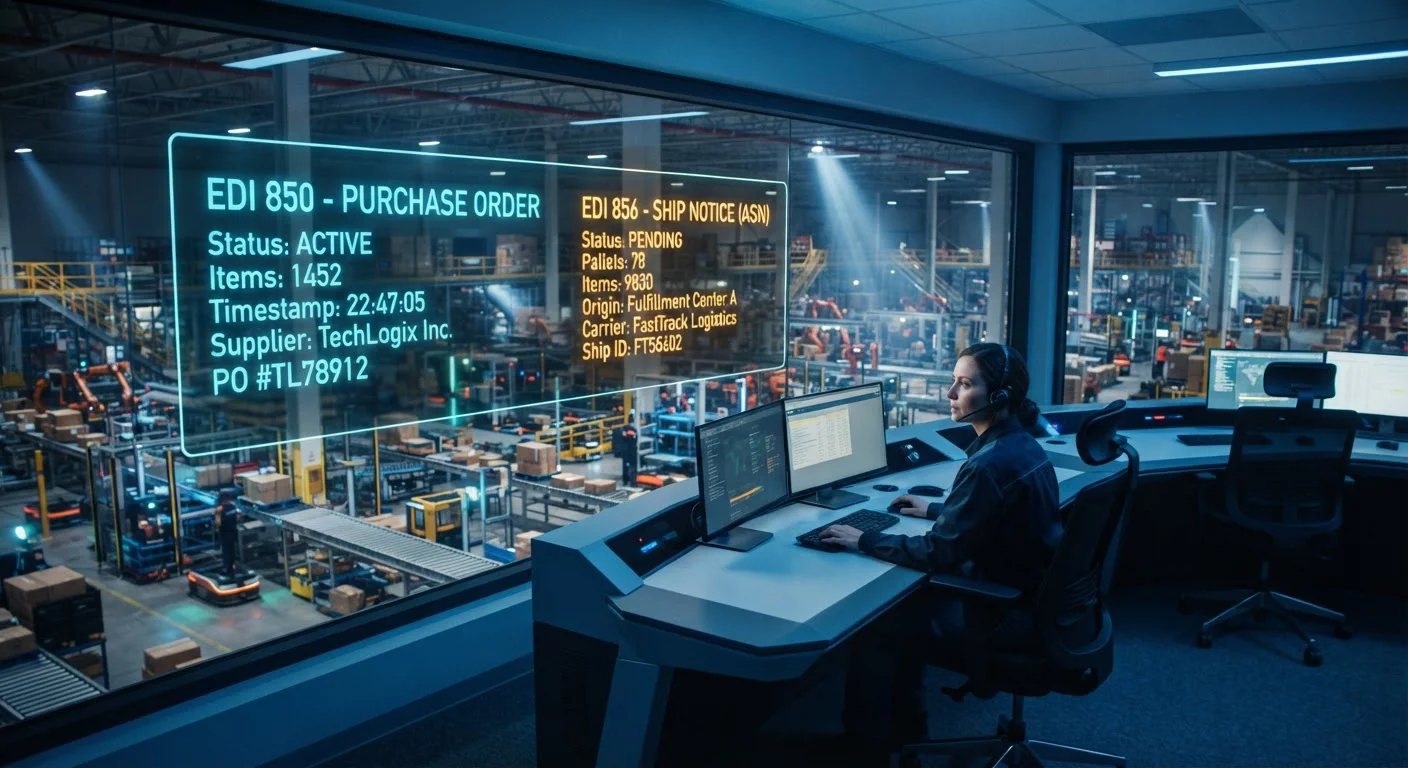
Winning a supplier contract with Home Depot is not a celebration—it is an operational liability until your automated data pipeline is fully tested and live. Too many manufacturers treat electronic data interchange as a minor IT checkbox to handle after signing vendor agreements. When the first wave of bulk purchase orders arrives, their staff drowns in manual data entry, ASNs fail barcode validation at the distribution center, and chargebacks wipe out early profit margins.
Achieving effective integration with Home Depot demands an engineering-first mindset. Home Depot operates one of the most sophisticated retail supply networks in North America, processing millions of items weekly across bulk distribution centers, rapid deployment centers, and direct-to-consumer dropship channels. To succeed, your backend systems must communicate with strict ANSI X12 standards, mirror exact physical packaging hierarchies, and sync operational data directly into your core business applications.
The Four Costly Myths of Home Depot EDI Integration
Suppliers entering the big-box home improvement sector often rely on outdated assumptions about vendor compliance. Let's puncture the most common misconceptions before they damage your vendor scorecard.
Manual browser-based data entry works only when you process fewer than 30 orders a month. Once order volumes climb, re-typing PO line items into your warehouse system introduces packing errors, delayed shipments, and inventory discrepancies. Real business growth requires an automated bridge to your accounting and warehouse tools through enterprise EDI infrastructure.
Home Depot uses the Advance Ship Notice to orchestrate real-time dock receiving. If the ASN payload does not reach their system before the physical carrier backs into the dock door, or if the pallet-pack-item hierarchy mismatches your GS1-128 physical carton labels, your shipment gets flagged for manual handling and incurs punitive vendor chargebacks.
Testing environments validate basic document syntax against ANSI X12 rules. They do not validate physical warehouse timing, carrier SCAC code accuracy, or peak holiday volume concurrency. Ongoing compliance requires real-time validation checks built directly into your translation software.
Treating EDI translation as an isolated communication island creates data silos. If incoming purchase orders do not automatically reserve stock in your ERP, sales teams overpromise inventory, leading to painful cancellation penalties on dropship orders.
The Core Home Depot Transaction Ecosystem
Home Depot trades dozens of business documents via standard ANSI X12 protocols over secure AS2 communication channels. Whether you supply brick-and-mortar stores or fulfill dropship orders via homedepot.com, your technical setup centers around four foundational transaction sets.
Purchase Order
Contains order quantities, destination DC or store identifiers, unit pricing, shipping terms, and cancel-after delivery dates.
PO Acknowledgment
Confirms receipt of order, line-item pricing acceptance, item availability, or backorder status back to the Home Depot buyer.
Advance Ship Notice
Communicates tracking numbers, carrier details, and nested carton/pallet packing data aligned with GS1-128 physical labels.
Electronic Invoice
Transmits billing line items and remit-to accounts, matching original PO numbers to accelerate financial matching.
Choosing Your Integration Path: Web EDI vs Direct ERP Sync
Suppliers must balance implementation speed against operational efficiency. Web portals get you compliant quickly, but integrated systems keep fulfillment accurate when order lines multiply.
| Capability | Manual Web EDI Portal | Integrated Cloud EDI to ERP |
|---|---|---|
| Order Ingestion | Manual export or copy-paste | Automated instant sales order creation |
| ASN Generation | Manual typing of carton tracking | Direct translation from warehouse scans |
| Order Capacity | Up to ~100 orders monthly | 10,000+ orders monthly with zero headcount added |
| Chargeback Risk | High (human entry typos) | Near zero (programmatic rule checks) |
| Implementation Speed | 1 to 2 weeks | 3 to 5 weeks for full mapping |
For brands targeting rapid growth in home improvement retail, using cloud EDI solutions eliminates the bottleneck of manual document handling, turning fulfillment into a structured, automated flow.
Technical Execution: Building Chargeback-Proof Workflows
Avoiding compliance penalties with Home Depot requires strict adherence to timing rules and data structure guidelines. Let's examine the technical controls that keep your integration healthy.
The Advanced Ship Notice contains the highest structural complexity in Home Depot integration. It must represent nested packaging levels: shipment, order, tare (pallet), and pack (carton). If your translation script maps 50 individual cartons directly to the shipment level instead of packaging them under specific pallet IDs, the receiving scanner will throw a mismatch error.
Invoicing precision is equally critical. When submitting an EDI 810 invoice, line-item item numbers, vendor SKU designations, and unit costs must match the corresponding purchase order down to the exact penny. If Home Depot orders 100 units at $12.50 each and your billing system transmits an invoice for $12.55 due to an unapproved price adjustment, the entire document rejects automatically, delaying cash collection.
Connecting Home Depot Orders Directly to Your ERP
An EDI pipeline is only as efficient as its connection to your financial and warehouse back office. Synchronizing Home Depot purchase orders directly into your system of record ensures operations teams pick the right items while accounting teams receive clean billing records.
Building an automated bridge through modern ERP integration solutions ensures that when an 850 PO lands, sales orders generate with complete customer references, distribution center codes, and requested ship dates. Below is how top enterprise platforms map to Home Depot requirements.
| ERP System | Integration Method | Primary Sync Focus |
|---|---|---|
| Oracle NetSuite | REST Web Services / SuiteScript | Real-time inventory commitment and item fulfillment sync via NetSuite EDI integration. |
| Microsoft Dynamics 365 | OData APIs / Business Central Connectors | Automated warehouse shipment creation via Dynamics 365 Business Central. |
| QuickBooks Enterprise | QODBC / SDK connectors | Batch sales order creation and automated invoice matching via QuickBooks ERP sync. |
Testing and Launch Checklist for Home Depot Vendors
Before Home Depot issues production certification, you must execute a comprehensive testing battery. Do not rush this process. Treat every test scenario as if live inventory and real capital are at stake.
Begin by verifying your AS2 connectivity parameters. Confirm your digital security certificates, IP addresses, and routing identifiers match Home Depot staging configurations. Once communications establish, proceed to document structure validation.
Your team will receive test purchase order bundles representing multiple order types: single-item orders, multi-pallet orders, and partial cancellations. Parse these payloads and generate corresponding 855 acknowledgments within the required SLA timeframe. Next, create test 856 ASNs containing realistic lot numbers, pallet identifiers, and tracking codes. Finally, transmit sample 810 invoices and ensure all math checks compute accurately against raw line costs and tax codes.
Once Home Depot compliance analysts verify that all document schemas meet their technical guide, your vendor status upgrades to production. Begin with low order batches to ensure your warehouse scanning hardware and shipping labels match digital records seamlessly.
Maintaining Peak Efficiency Across Your Supply Chain
Achieving initial certification is only the starting line. True vendor success depends on proactive monitoring. Transactions drop when carriers fail to generate tracking codes, when internet connections blip during AS2 handshakes, or when trading partners update document version specs without notice.
Ensure your integration architecture includes automated alerts for unacknowledged documents. If Home Depot sends an 850 PO and your system does not return an EDI 997 Functional Acknowledgment within hours, your automated monitor should alert your integration team immediately. Catching technical mismatches internally before they impact distribution center dock schedules is what separates elite vendors from suppliers burdened by constant deductions.
Building a resilient Home Depot integration protects your vendor standing, shortens order-to-cash cycles, and builds the operational capacity needed to handle growing order volume with ease. If you want to connect your ERP directly to Home Depot or audit your existing EDI workflows for compliance vulnerabilities, speak with our integration specialists today.
— Sarah Jenkins, Integration Consultant, Cogential IT
Frequently Asked Questions
Discussion & Questions (0)
Get the Industry EDI Compliance Checklist
Use this checklist to prepare your Industry EDI workflow before onboarding.
Leave a Comment