
EDI 820 Remittance Advice Automates Cash Application
 Cogential IT Editorial Team
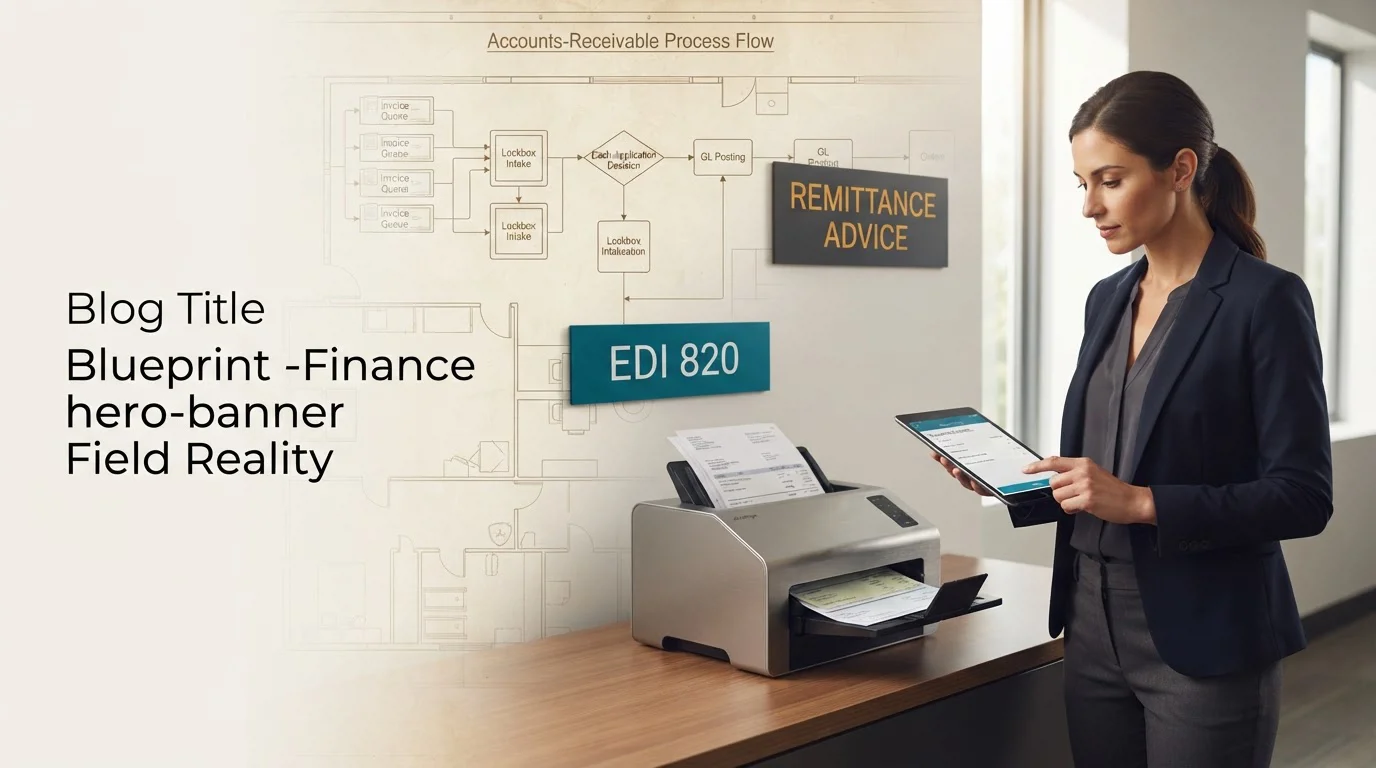
Is EDI 820 the Payment, or Just the Story That Comes With It?
If you sit in accounts receivable and someone just told you, We need to start taking EDI 820 from this customer, the first thing you probably typed into Google was some version of: Does EDI 820 actually pay me, or does it just tell me I got paid? That is the blunt question almost everyone asks, and the answer is: it is mostly the story, not the money itself.
EDI 820 is the X12 transaction set for a remittance advice — sometimes called a payment order/remittance advice. It tells your AR system which invoices a particular chunk of cash is meant to cover. In many setups it also carries the instructions that kick off the payment, especially when your customer is pushing ACH through a treasury service. But the 820 message does not move dollars. The bank or payment rail moves the dollars. The 820 moves the data your team needs to turn a mysterious deposit into posted cash.
The Bold Claim That Keeps AR Projects Stuck
Sales teams and consultants like to say that EDI 820 automates cash flow. That is close enough to be dangerous. What it really automates is the matching conversation between a payment and your open AR. If your buyer sends you $248,000 and your system holds 47 open invoices, the 820 tells you exactly which invoices are being paid, which are short-paid, and what deductions your customer took. Without it, somebody is opening a PDF, reading it, and typing line items into Excel. With a clean 820 integration, that matching becomes a straight-through process — as long as the data is clean, the rules are right, and your ERP is listening.
That is why it is worth looking at the bigger picture before you buy mapping software. A good B2B EDI integration partner will ask about your bank format, your lockbox provider, and your ERP integration before they touch a single segment. The 820 is only one lane of the highway.
Five Myths About EDI 820 That Cost You Money
Myth 1: EDI 820 Sends the Money
No. The 820 is an electronic envelope of instructions. It might ride alongside an ACH transaction or a wire, but the funds travel through your banking rails. Think of it like the packing slip taped to a box: it tells you what is inside, but it is not the box.
Myth 2: A Payment Already Means We Do Not Need an 820
This is the one that keeps AR clerks awake. A deposit hits your account. You see $50,000. You have no idea which invoices it covers. That cash sits in unapplied suspense until someone chases the buyer for a remittance. An EDI 820 arrives before or with the funds and gives you the invoice-by-invoice breakdown. It is the difference between recognizing revenue today and recognizing it in two weeks after three follow-up emails.
Myth 3: Receiving 820s Makes Cash Application Automatic
It gets you a long way down the road, but it is not magic. Exceptions happen constantly: short pays for damaged goods, promotional allowances, freight disputes, partial shipments, tax rounding, and invoice numbers that do not match because your buyer uses their PO number while you used an internal sales order ID. Each exception needs a business rule. If you do not build those rules into your cash application engine, the 820 just creates a different kind of manual work.
Myth 4: EDI 820 Is an 810 Invoice in Reverse
An EDI 810 invoice says, Here is what I shipped and here is what you owe me. An 820 says, Here is what I am paying and here is what the payment is for. They reference the same invoices, but the direction, segments, and business purpose are different. The 820 is about settlement, not billing. Conflating the two is a fast way to build a mapping nobody trusts.
Myth 5: Only Big Retailers Send 820s
Large retailers get most of the press, but manufacturers, distributors, healthcare payers, insurance companies, 3PLs, and financial services operations all use remittance advice. If a trading partner pays you on a schedule and has multiple invoices per payment, they are a candidate for EDI 820.
What EDI 820 Actually Looks Like in Your Stack
When an 820 lands in your environment, it passes through several layers before cash posts cleanly. Here is the flow, from the moment it leaves your trading partner's system to the moment your AR ledger updates.
The top layer is where the message originates — your buyer's treasury, bank, or EDI gateway. The next layer is transport, which is where cloud EDI solutions and VANs live. After that, translation turns the raw X12 into something your systems can read. The raw X12 structure is documented on our EDI 820 transaction set page. Then the cash application engine applies business rules, matches payments to invoices, and flags exceptions. At the bottom, your ERP posts the cleared cash to AR and the general ledger. If any one layer is weak, the whole stack wobbles.
Where Most 820 Projects Actually Trip
Most projects do not fail because the EDI transport is broken. They fail because somebody assumed the standard was the specification. The X12 820 standard gives you the grammar; your trading partner gives you the dialect. One partner may use the BPR segment to describe the total payment, while another relies on different loops for the same purpose. One may send invoice references in REF segments, another in RMR loops, and a third may bury the deduction reason in an ADJ segment that your translator did not know to pass through.
If your trading partner cannot show you a real 820 file covering a short pay and a deduction, you are not ready to build mapping. You are ready to ask more questions.
The second common trip point is invoice identity. Your ERP may call it an invoice number. Your buyer may call it a PO number, a vendor memo reference, or a store-and-date combination. Until you align those identifiers, the 820 will land in your cash application engine and immediately generate exceptions. That is not a technology problem; it is a data governance problem dressed up as EDI.
The third trap is the handoff to finance. An 820 can match a payment to invoices beautifully, but if your bank statement shows the deposit two days later with a different reference number, your reconciliation still breaks. You need to design the process so the remittance advice, the payment rail, and the ERP posting all talk to each other. When they do not, AR ends up with the same suspense balance, just with more steps to get there.
How EDI 820 Compares to the Alternatives
Not every payment needs an 820. Here is how it stacks up against the two most common fallback methods.
| Method | What arrives | Typical match rate | Best for |
|---|---|---|---|
| PDF or email remittance | Human-readable list of paid invoices | Low to medium; depends on OCR or manual entry | Low volume, few partners |
| Lockbox with OCR | Scanned check images plus OCR text | Medium; still needs review | Checks from many small customers |
| EDI 820 remittance advice | Structured payment-order/remittance data | High when mapping is clean | High volume, disciplined partners |
Choose EDI 820 When the Volume Justifies the Setup
- You receive 1,000+ payments a month from the same partners
- One payment routinely covers 10 or more invoices
- Your trading partner already offers 820 or is willing to enable it
- You have an ERP or cash-application tool that can consume structured remittance
- Volume is under 200 payments a month and most are single-invoice
- Your customer base is fragmented and cannot standardize
- Your current cash application process has no discipline to begin with
- The partner only sends checks and refuses electronic remittance
What to Do Instead of Hoping the 820 Fixes Everything
Here is the practical sequence we use on most remittance projects:
If your team runs QuickBooks or another small-business ERP, a QuickBooks EDI integration can still consume an 820 and post it cleanly. If your team does not have the bandwidth to run this in-house, EDI outsourcing services can handle partner onboarding, mapping, and monitoring while your finance team stays focused on exceptions.
Bottom Line: Start With the Payment Story, Not the Magic
EDI 820 is a powerful tool for automated cash application, but only when you treat it as structured remittance advice, not a replacement for your bank, your ERP, or your internal controls. The companies that get the most value are the ones that fix their invoice identifiers, write exception rules, and design the handoff to finance before the first production file arrives.
If you are ready to stop chasing PDFs and start matching payments the same day they land, talk to our EDI team about an EDI 820 integration plan that fits your ERP and your trading partners.
— Cogential IT Editorial Team, Integration Consultant, Cogential IT
Frequently Asked Questions
Discussion & Questions (0)
Get the Industry EDI Compliance Checklist
Use this checklist to prepare your Industry EDI workflow before onboarding.
Leave a Comment